
Our School Therapy Dog
Meet our School Therapy Dog

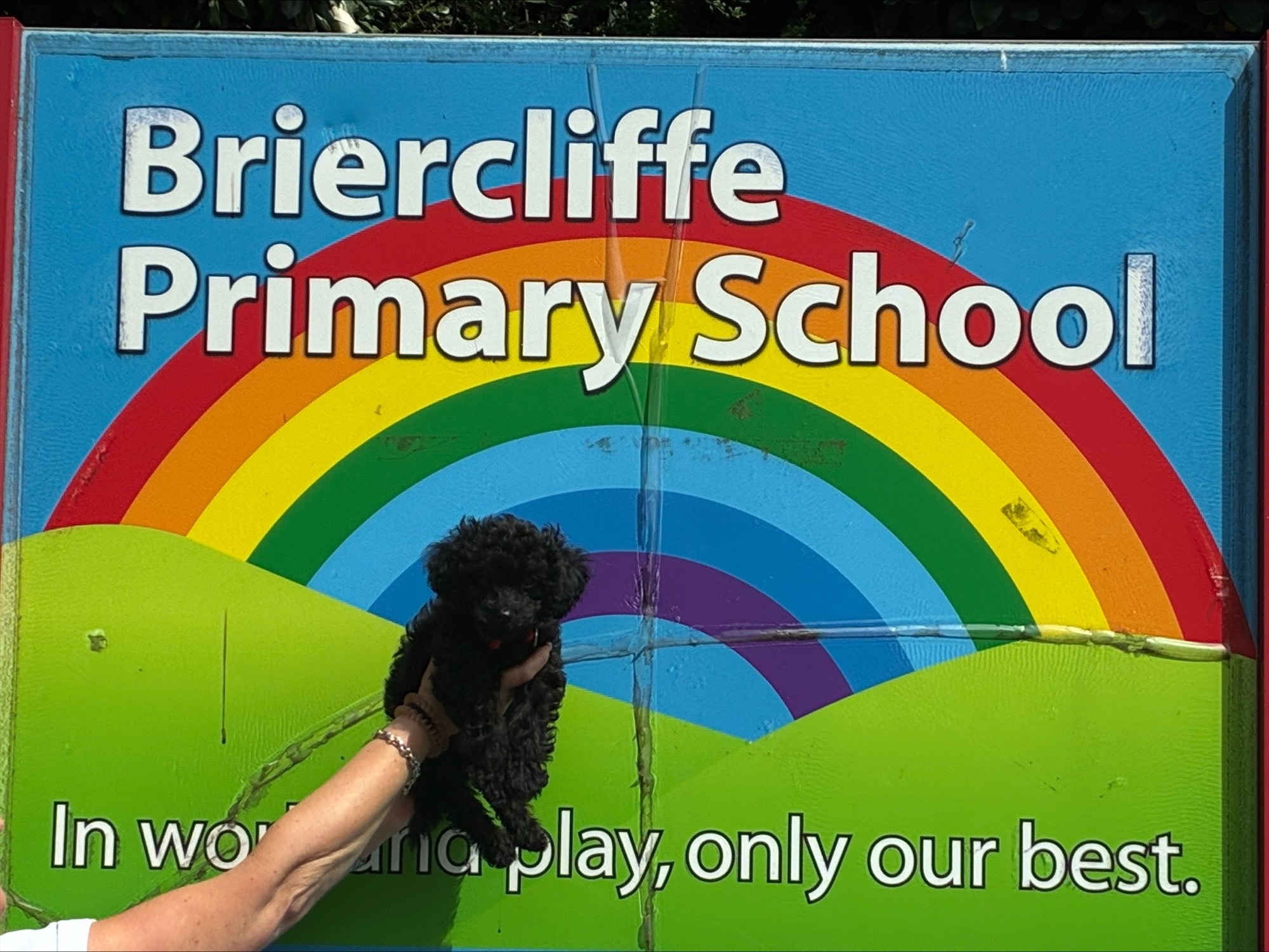
Douglas
Many schools now benefit from therapy dogs to support pupils in a number of areas, including reading and helping to reduce anxiety. Briercliffe Primary School's Therapy dog is a Cavapoo who has lived with Miss Ramsbottom, our Headteacher, since he was a young puppy. His dad is a Toy Poodle and his mum is King Charles Cavalier.
The advantages of this mixed breed are:
- No shedding: reducing the possibility of exacerbating pet allergies.
- Easy training: Douglas has worked with a trainer since he went to live with Miss Ramsbottom. Cavapoo's intelligence and trainability make them eager to please, and so ideal for a therapy dog.
- Good with children: this is a suitable breed for children and is known to be playful and affectionate around them.
Douglas will already be familiar with the school environment as he will spend time on site over the summer holidays, as part of his training.
What are the benefits of having a school dog?
Numerous research studies have shown the benefits of therapy dogs in schools. Therapy dogs have been working in schools for the past 5 years across the UK; they have been commonplace in schools in the USA and Australia for many years. Research evidence indicates that benefits include:
-
- Cognitive – companionship with a dog stimulates memory, problem-solving and game playing.
- Social – a dog provides a positive mutual topic for discussion, encourages responsibility, wellbeing and focused interaction with others.
- Emotional – a school dog improves self-esteem, acceptance from others and lifts mood, often provoking laughter and fun. Dogs can also teach compassion and respect for other living things as well as relieving anxiety.
- Physical – interaction with a furry friend reduces blood pressure, provides tactile stimulation, assists with pain management, gives motivation to move, walk and stimulates the senses.
- Environmental – a dog in a school increases the sense of a family environment, with all of the above benefits continuing long after the school day is over. Children who have worked with a dog report that one of the most valued qualities is the unconditional love and attention it gives to everyone with whom it interacts.
Reading to dogs has been proven to help children develop literacy skills and build confidence, through both the calming effect the dog’s presence has on children as well as the fact that a dog will listen to children read without being judgemental or critical. This comforting environment helps to nurture children’s enthusiasm for reading and provides them with the confidence to read aloud.
FREQUENTLY ASKED QUESTIONS
What if my child is allergic to dogs?
It is understandable that some of you may be concerned about possible allergic reactions to a school dog. Douglas is subjected to the most thorough cleanliness and grooming regime. They will only be allowed in situations with pupils who voluntarily wish to work with them.
Is the dog properly cared for?
Douglas is extremely well looked after (spoilt!) and lives with Miss Ramsbottom. He will always be accompanied by an adult and stay on his lead walking around school. Whilst he is in school, he will have access to a dog crate in one of the 3 offices where he can rest and have quiet time. They will visit the vet regularly for all their treatments as well as regular check-ups. If they are unwell for any reason, she will stay at home.
What is my child is scared of dogs?
Some children may have had upsetting experiences and have a fear of dogs (or another animal). Experience and research have shown that, with proper guidance and handling, children can learn to overcome their fear of animals and grow in respect and appreciation for them. We hope that children at Briercliffe will be similarly helped. Parents have the opportunity to ask that their children do not have contact with Douglas, but equally, the child may like to meet him with the parents present. This can be arranged with Miss Ramsbottom.
Will the school still have a 'no dogs' policy?
Yes. Our school continues with a ‘no dogs’ policy. Attending school dogs/therapy dogs do not fall within the remit of this policy as they are subject to rules as part of our risk assessment. Douglas will be on a lead at all times when moving around the school property and will always be accompanied by an adult. We will make sure that they don't leave any mess on school property. They will also be fully insured to carry out their role, thus allowing them to be on the school site.